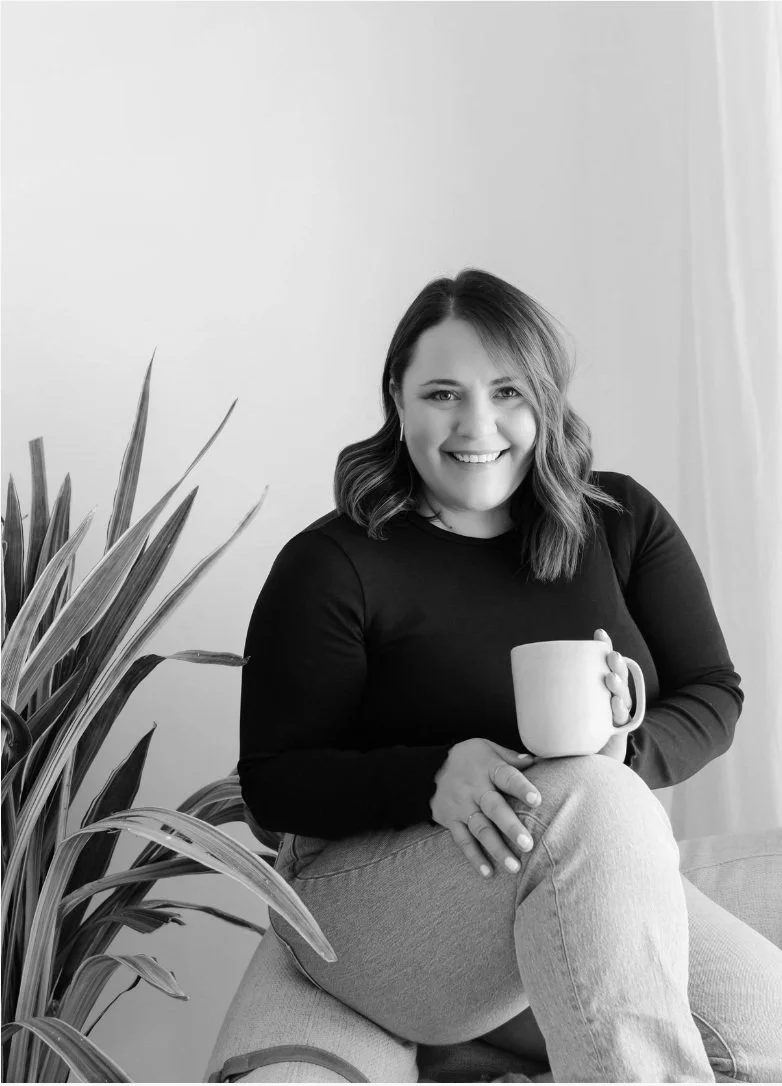
Episode 048. How I Doubled My Agency by Doing Less with Lauryn Warnick
Over the past decade, Lauryn Warnick has quietly built Villain Branding into a trusted partner for high-growth B2B companies navigating moments where brand decisions carry real weight, scale, complexity, leadership alignment, and pressure. In the past two years, she's doubled Villain's revenue, putting the firm in the rare 2% of women-owned businesses to cross the seven-figure threshold.
But that growth didn't come from adding more services, more people, more complexity. It came from a painful identity shift that most founders avoid talking about, and from the counterintuitive decision to do less, not more.
The Three Eras of an Agency
Lauryn breaks her 10-year journey into three distinct chapters. The freelancer era, where you're saying yes to everything and every email carries enormous weight. The collective era, where you start pulling in talented peers but you're still one of the group, not quite the leader. And the consultancy era, where you're actually running a business with systems, accountability, and a clear vision.
The hardest transition? Going from collective to consultancy. It requires letting go of an identity that's served you well, in Lauryn's case, being a strategist, and stepping into a role you've never played before: CEO.
The Identity Problem No One Wants to Discuss
"My identity for my entire career has been a strategist," Lauryn shares. "It's hard to say, nope, this was a role that I played, but it's not who I am."
For many agency founders, especially women, there's an additional layer: humility that looks like reluctance to step above the collective. The desire to be one of the talented team rather than the person calling the shots. But at a certain stage, that humility becomes a ceiling.
The solution isn't ego, it's systems. Lauryn built structures that made it nearly impossible to slip back into day-to-day client work: billable rates too high for project work, 75% of her time allocated to new business activities, and clear accountability for every team member that doesn't include her as the safety net.
From "More" to "Right"
The mindset shift that unlocked growth wasn't about doing more. It was about being ruthlessly clear on what was right.
"We made the conscious decision to say this is who we're for," Lauryn explains. "And being really comfortable saying we are NOT the best team to do X." In a market where AI makes it tempting to expand in every direction, Villain doubled down on what they do best instead of broadening their horizons.
This extended to investments too. Last year's focus was operations and systems, not sexy, but crucial. This year, it's all about revenue. "I just care about revenue," Lauryn says. "Now that we've built the systems, let's prove to the world that we are the consultancy that's perfect for solving these specific problems."
The Rebrand That Wasn't About Looking Different
When Villain rebranded, it wasn't because they were bored or because everyone else was doing it. It was because the business had evolved past what the brand could support.
"I suddenly saw all the workarounds I'd been doing," Lauryn admits. "Not sharing our website with prospects. Constantly redesigning pitch decks myself. Testing stories told in different ways." The brand was lagging behind the business.
The tipping point? Shifting from pure referral business to intentional outreach. When prospects are looking at you cold, no relationship to rely on, the brand has to do the heavy lifting. For Villain, working with billion-dollar companies meant their brand needed to tell a story bigger than Lauryn herself.
The Uncomfortable Truth About Investment
Scaling past a million often means making less money personally, at least temporarily. Lauryn's husband reminds her regularly that they made more money last year. But that's the trade-off for building something sustainable.
Not every investment pans out. Villain's first $30K investment in operations and ClickUp? "Totally flushed down the toilet," Lauryn admits. But the lesson wasn't to stop investing, it was to learn what didn't work and try again. They shifted to Notion, which has worked for 18 months.
"If this is your first investment that didn't pan out, welcome to business," Melissa adds. "Not one story has ever been told where there were not mistakes made, lessons learned, bad investments."
Brand as Operational Leverage
What does Lauryn want Villain to be known for? Making brand useful at scale.
"Brand should be measurable. It should return on the business. It should feel embedded in the business rather than theoretical or a pretty PDF of guidelines." In other words, brand isn't a marketing thing, it's operational leverage.
As AI accelerates the pressure for agencies to tie their work to ROI, this perspective becomes increasingly critical. The agencies that will survive aren't the ones offering more services. They're the ones who can clearly demonstrate the business impact of what they do.
"Less is more," Lauryn concludes. "Do a thing really well, find the right way to do it in a streamlined way, and then get rid of the rest."
(00:00:00) Intro & Meet Lauryn Warnick
Villain Branding's journey to seven figures and the 2% of women-owned businesses
Why Melissa considers Lauryn one of her best collaborators
The importance of finding advisors who don't have anything to prove
(00:05:59) The Three Eras of Building an Agency
Freelancer era: saying yes to everything, everything feels urgent
Collective era: pulling in talented peers, still not quite the leader
Consultancy era: running an actual business with systems and accountability
Why "era-ing" your 10-year business isn't silly, it's necessary
(00:11:38) The Identity Shift from Strategist to CEO
Why your career identity might be holding your agency back
The difference between starting a business in your 20s versus your 30s and 40s
"I never want to be in the room where I'm the smartest person"
Building systems that make it impossible to slip back into day-to-day work
(00:21:50) From Scarcity to Right: The Mindset Shift
Moving from "more, more" to "right, right"
Being confident saying who you're NOT for anymore
The temptation to grow the way you're "supposed to" vs. what's right for your business
Why "do no harm" matters as you scale
(00:31:36) Building Trust in Yourself as a Founder
The pressure of having your husband quit his job to work in your business
Imposter syndrome around calling yourself a CEO
Why thinking about what you'd do if it didn't work out actually builds confidence
Listening to external validation when internal belief is shaky
(00:39:19) The Rebrand: When Your Brand Lags Behind Your Business
How to know when a rebrand is actually necessary (not just "everyone else is doing it")
When your audience shifts but your story hasn't caught up
The workarounds that signal your brand isn't working anymore
Why your brand has to be bigger than you when you're selling to enterprise
(00:46:30) Investing in Your Business When It Hurts
The reality: you probably made more money before you hit a million
Year one investment: operations and systems (not sexy, but crucial)
Year two focus: revenue generation after the foundation is built
What to do when your first investment doesn't pan out
(00:56:50) What Villain Wants to Be Known For
Making brand useful at scale, measurable, embedded in business, not theoretical
Brand as operational leverage, not just a marketing thing
Why agencies need to tie their work to ROI (especially now with AI)
"Less is more. Do a thing really well, then get rid of the rest."
This episode is brought to you by:
Copper is the CRM that helps agencies attract more clients, streamline communication, and deliver projects effortlessly. Exclusive to listeners of the podcast, Copper is offering 15% off any annual plan with promo code AGENCYDARLINGS at copper.com/agency
Connect with Lauryn:
Villain Branding: villainbranding.com
LinkedIn: linkedin.com/in/laurynwarnick
Instagram: instagram.com/lauryn.warnick
Connect with Melissa & Meredith:
Waverly Ave: waverlyave.com
Instagram: instagram.com/waverlyave.co
Le Chéile: lecheile.co/contact
Instagram: instagram.com/lecheile.co